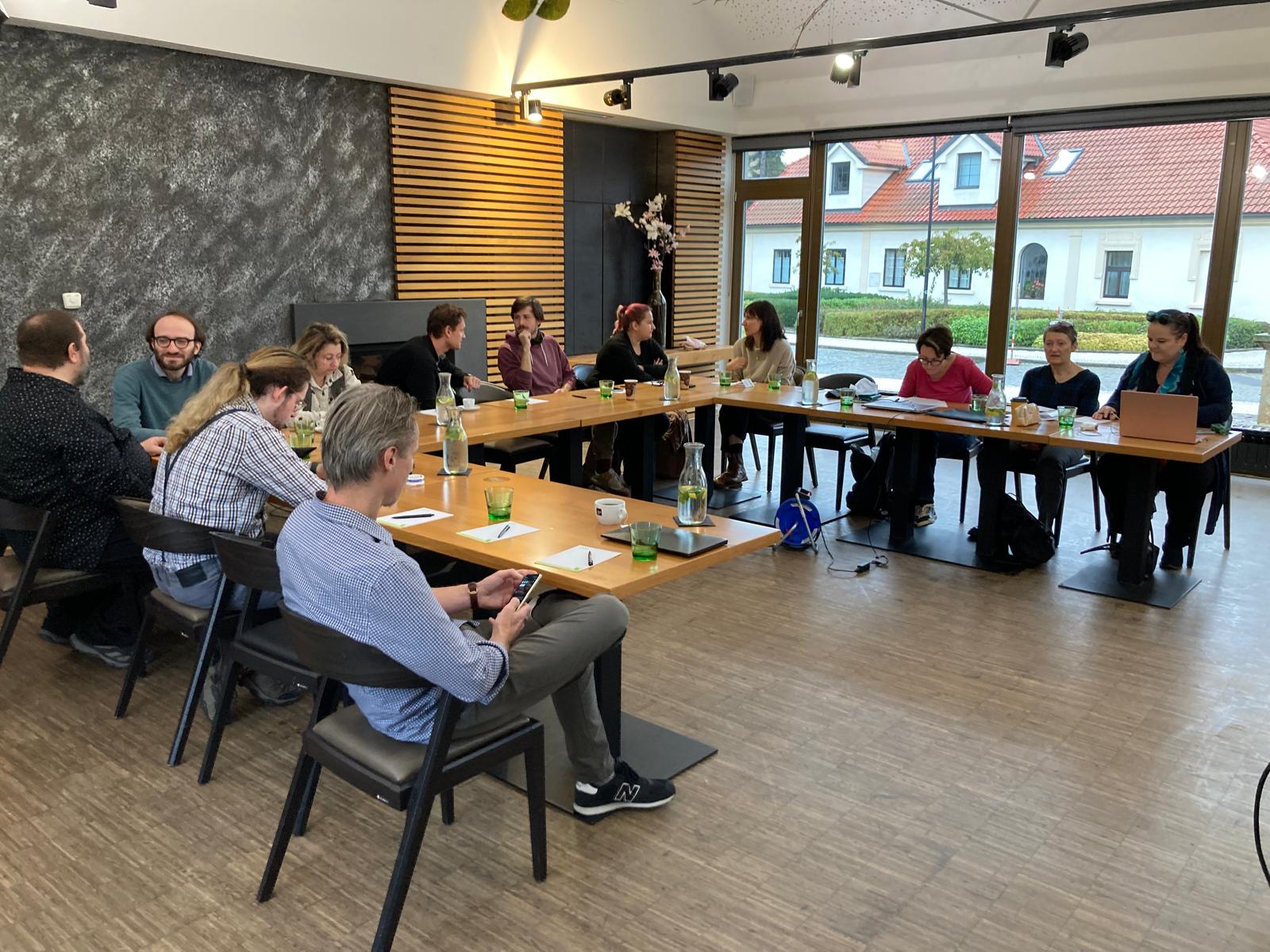
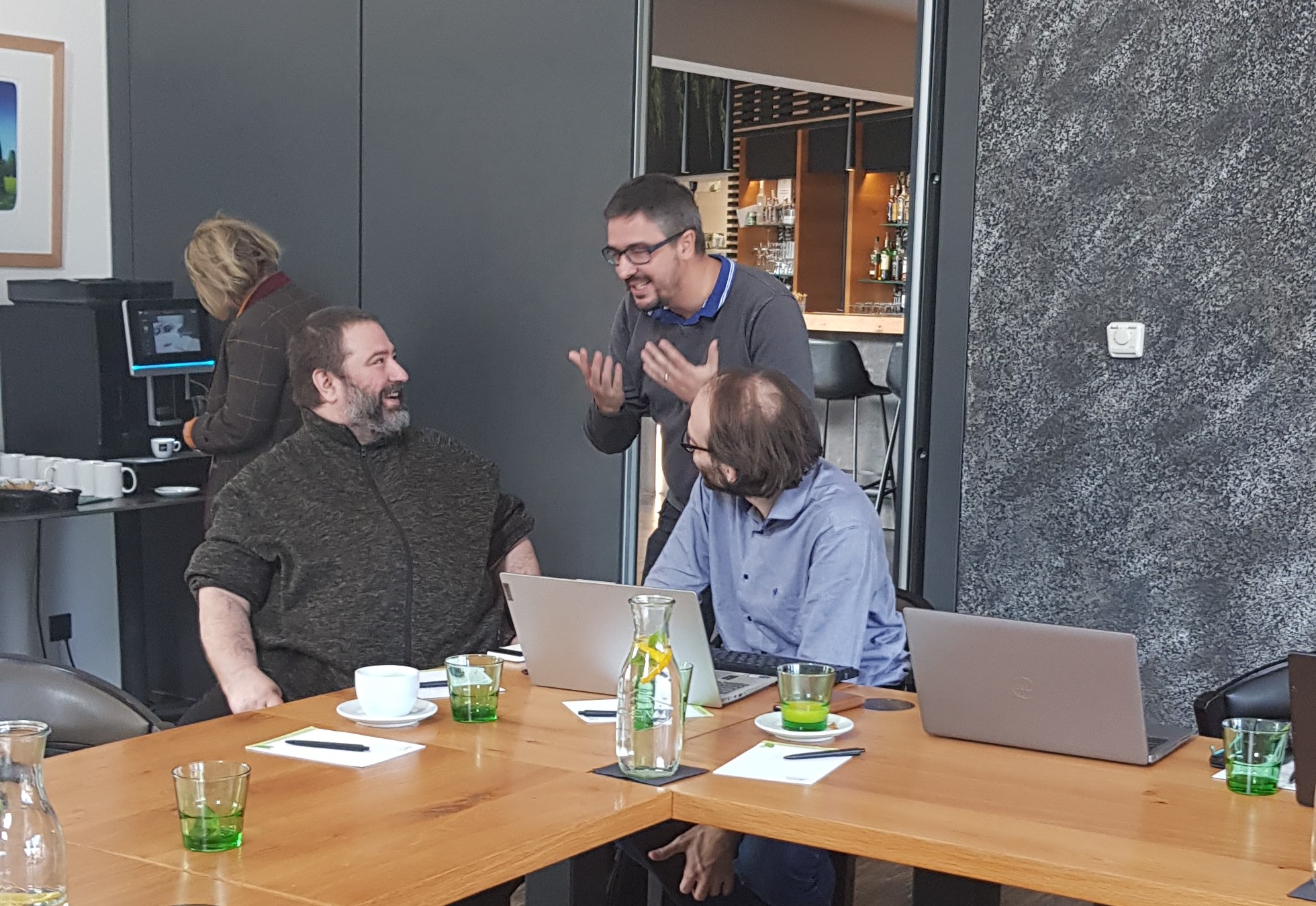
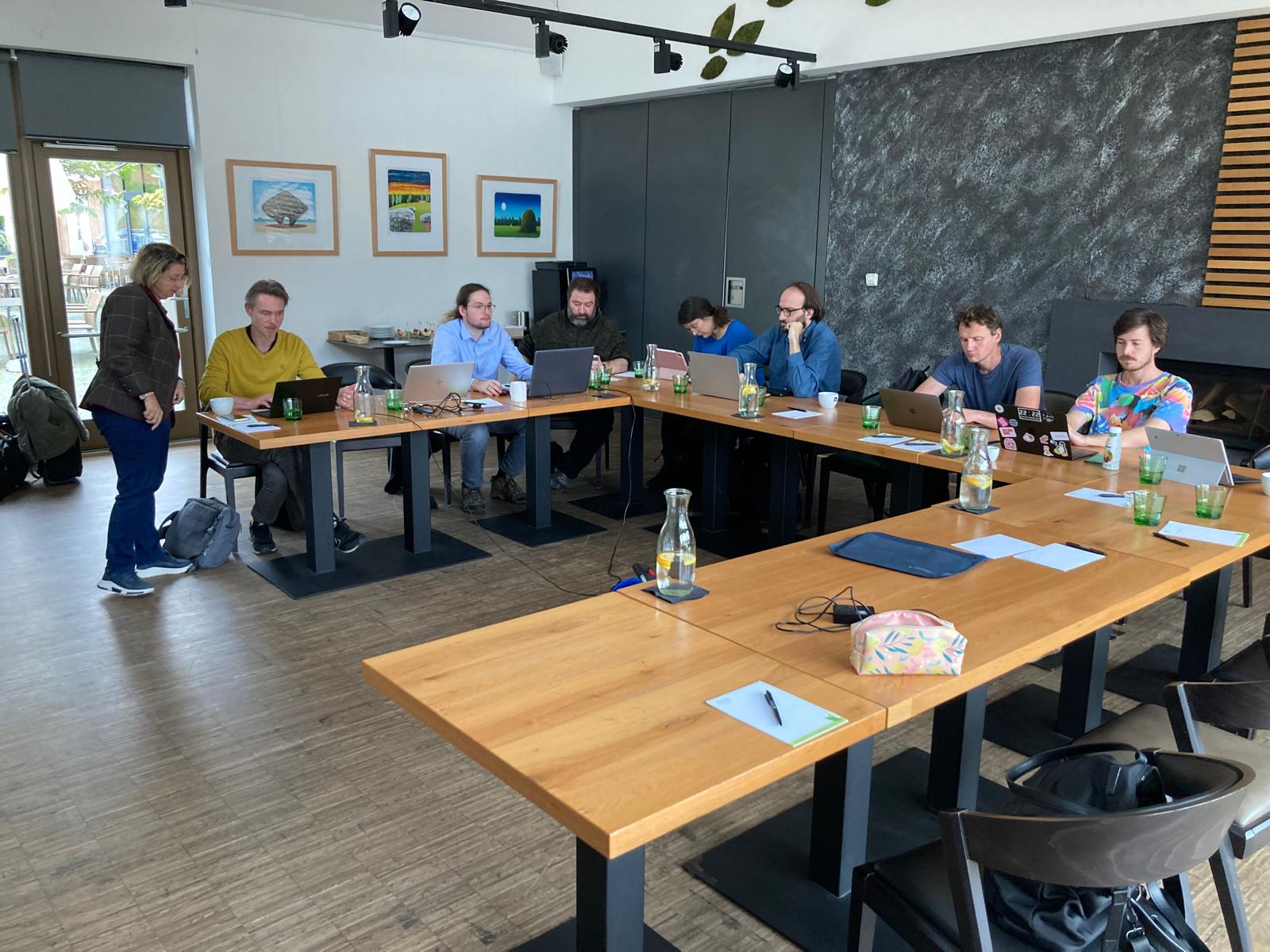
On October 2–4, 2024, TOME’s 2nd School of Evolutionary Metaphorology took place in the beautiful town of Dobřichovice at the Panská zahrada venue. This event brought together the complete research team of TOME, giving an opportunity to intensify synergy, share knowledge and know-how, and strengthen team bonds.
The program featured a mix of interactive workshops, group discussions, and team-building activities. The sessions were designed to foster collaboration, stimulate inventiveness, and highlight the importance of shared learning and communication in advancing TOME’s research objectives.
TOME’s 2nd team school was attended by: Alessandro Nannini, Alexander Huber (online), Jan Tvrz, Jana Ředinová, Jana Švadlenková, Jindra Kubíčková, Jo Hedesan, Lenka Řezníková, Lucie Storchová, Marcela Slavíková, Martin Žemla, Márton Szentpéteri, Ondřej Kříž, Petr Pavlas, Vojtěch Kaše, and Vladimír Urbánek (guest).
Below you can find summaries of the talks presented over the three days of the School.
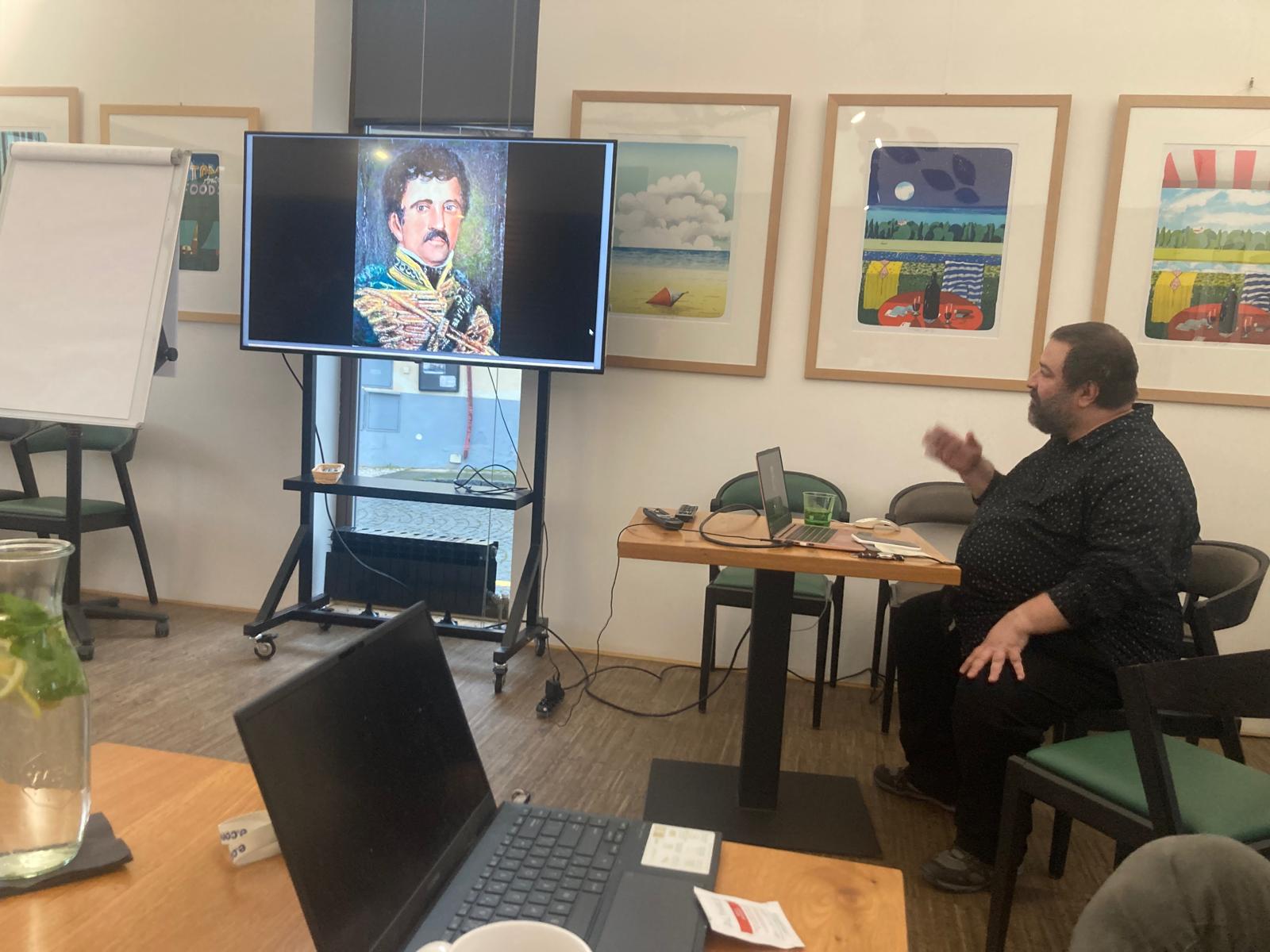
DAY 1 – Intellectual-Historical Group
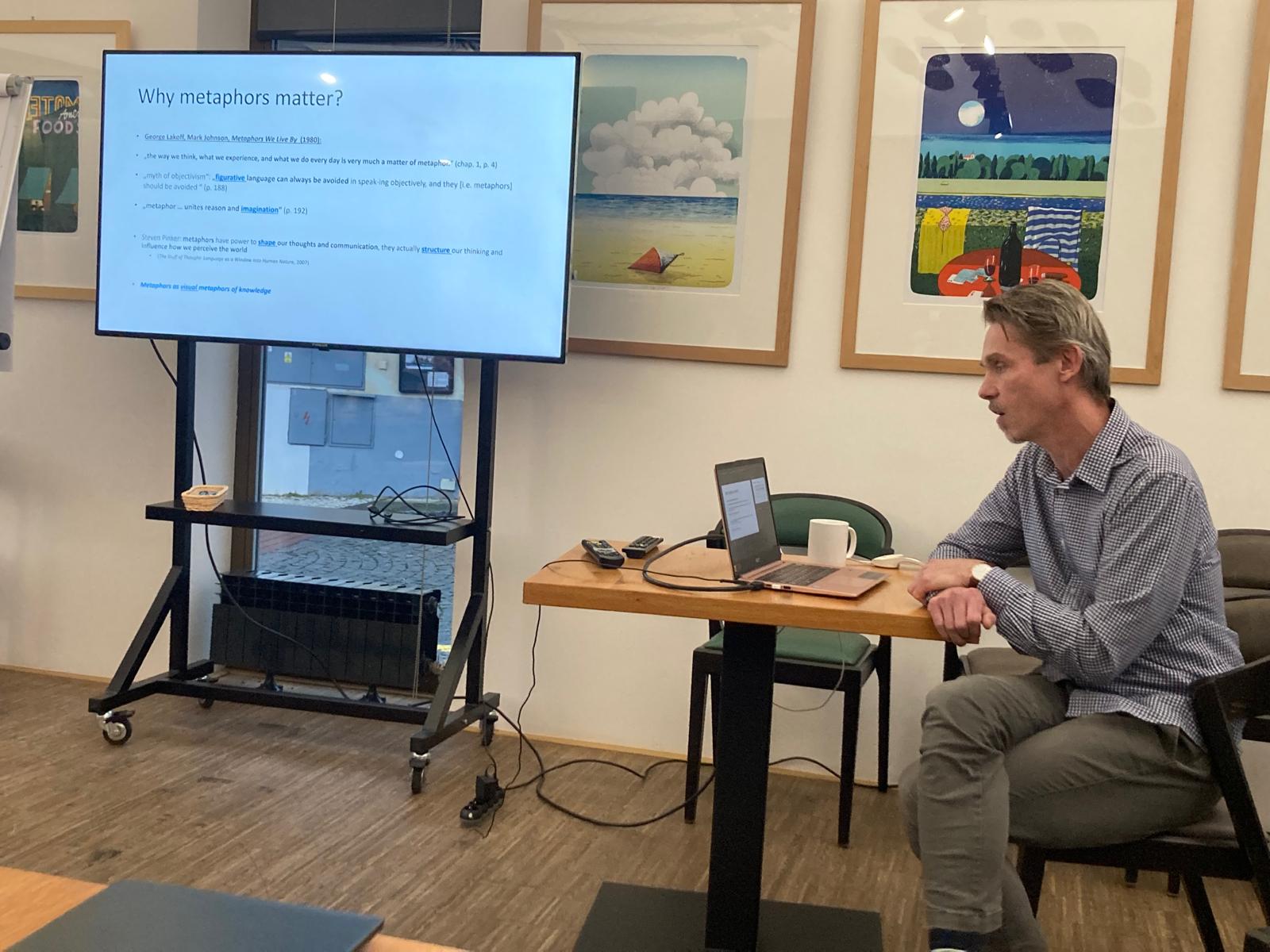
- Petr Pavlas – Evolution of Metaphors as a History of Cultural Ideas. The Case of the Circle/Sphere Metaphor before 1630
Petr introduced a theoretical framework for studying the evolution of metaphors and traced several cognitively significant uses of circle, cycle, and sphere metaphors from antiquity up to 1630, marked by the publication of Johann Heinrich Alsted’s Encyclopaedia septem tomis distincta. With this introductory contribution, Petr significantly expanded and refined the previously published theoretical-methodological framework, as contained in the first part of his monograph (in Czech) titled Towards the Book of Books: Herborn Enyclopaedism and the Comenius-Leibniz Constellation.
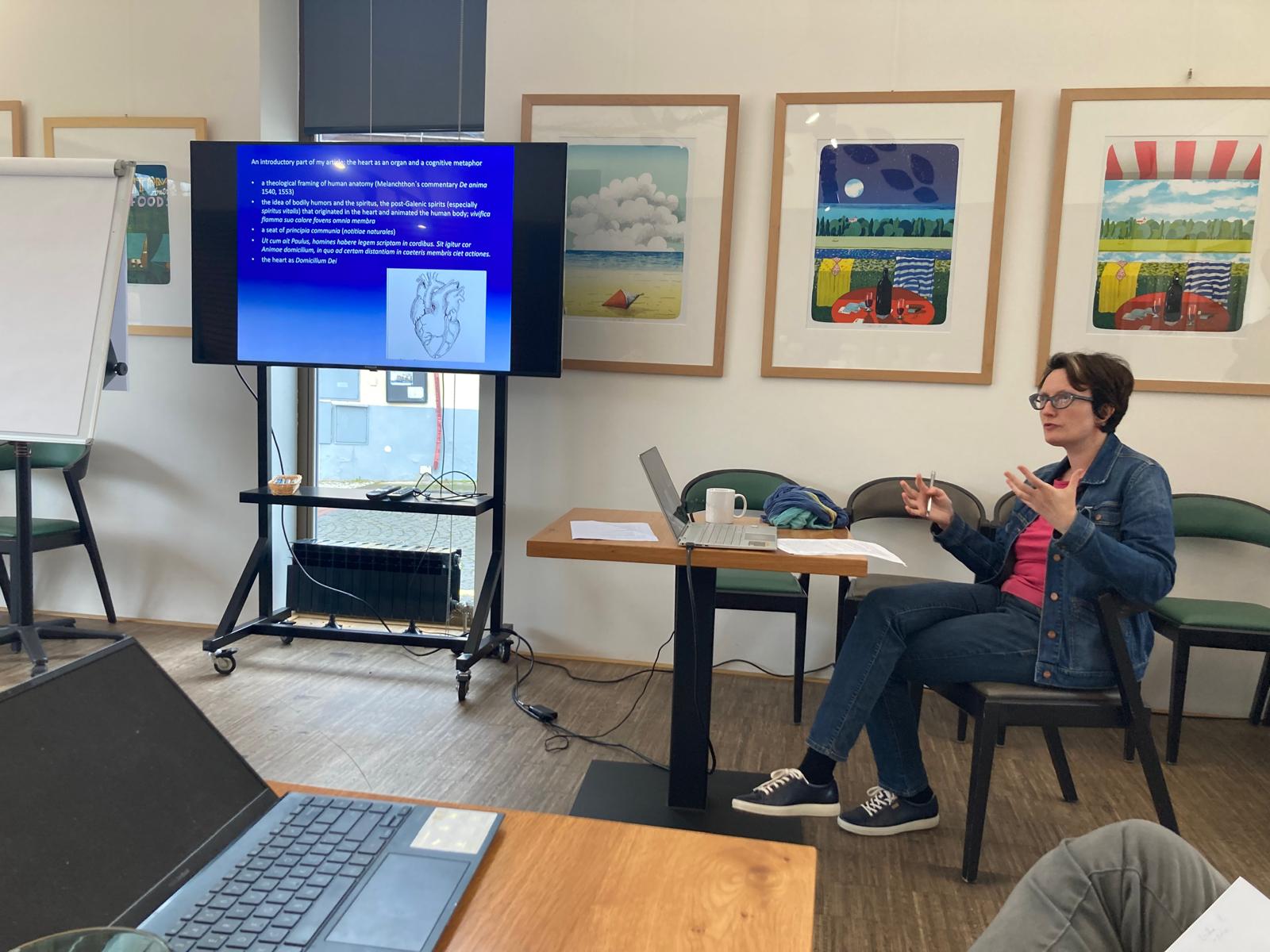
- Lucie Storchová – Metaphors of the human heart and their epistemological shifts after 1600: A case study in Protestant discourses of power
Lucie examined the metaphor of the heart in 16th- and 17th-century political, social, natural-philosopical, and natural-theological discourse. She discussed the centrality of heart as a symbol of cooperation within the “social body” and explored its function in justyfing discipline, hierarchy, and obedience. Lucie highlighted shifts from Melanchthonian providentialism to Paracelsian-spiritualist mysticism around 1610, when political heart metaphors declined, and astronomical metaphors like the “Sun as the heart” gained prominence, often advocating heliocentrism.
- Lenka Řezníková – Metaphors of Harmony in Comenius and in Early Modern Science
„Mersenne accomplished the harmonization of mechanics through the mechanization of music.“ (Peter Dear)
Lenka analysed the tension between musical and mathematical-mechanical notions of harmony in early modern thought. For Comenius, harmony signified both a mechanical order and a holistic congruence, oscillating between metaphors for knowledge, education, and encyclopaedias. She explored the metaphor’s dual usage, emphasising its broader implications in early modern intellectual contexts.
- Marcela Slavíková – Metaphors of Music in Comenius and in Early Modern Science
Marcela presented her analysis of musical metaphors in Comenius’ works and other early modern sources, making use of the databases like Comenius Opera Omnia and NOSCEMUS. She argued that musical metaphors were not always directly tied to knowledge but often carried purely rhetorical or closely biblical significance, as seen in Comenius’ works like Bazuine des genaden jaar (1632) and Letzte Posaun über Deutschland.
- Alessandro Nannini – Georgics of the Soul: Agriculture as Cultivation of the Self in the Early Modern Age
Alessandro traced the metaphor of the “georgics of the soul” from antiquity through early modernity. Drawing substantially on Cicero, Seneca, Augustine, and Bacon, he explored its ethical dimensions, showing how thinkers like Wesenfeld, Pufendorf, and Baumgarten developed the concept into frameworks for both individual and (later) collective cultivation. He linked this tradition to the broader history of care for the soul, which could have made his contribution very interesting also for Jan Patočka studies.
- Márton Szentpéteri – King Solomon in Transylvania: Miklós Bethlen and his Castle
Opposing the linguistic turn and logocentrism, Márton expanded metaphor studies to include spatial metaphors in architecture, citing John B. Onians’ theories. He examined Miklós Bethlen’s (1642-1716) verbal discourse on the one hand, and architectural concepts as implemented in Bethlenszentmiklós/Sânmiclăuș, Transylvanian castle (1667–1683), on the other hand. Márton convincingly showed Bethlen’s inspiration drawn from Nicolaus Goldmann’s teaching and Juan Bautista Villalpando’s reconstruction of the Temple of Solomon. Márton argued that Bethlen’s self-fashioning echoed young King Solomon’s wisdom, contrasting with his later autobiographical reflections on the vanity of architecture.
- Martin Žemla – See, Hear, Taste. Sensory Metaphors in the 16th and 17th Century Paracelsianism
Martin presented a synoptic and comprehensive historical overview of sensory metaphors in European philosophical, theological, and mystical traditions, with a special focus on Paracelsianism. He analysed the challenges of classifying taste metaphors as metaphors of knowledge, contrasting them with the traditionally exemplary visual metaphors, and highlighted their complex roles in knowledge frameworks of the era.
II. DAY 2 – Computational-Historical Group
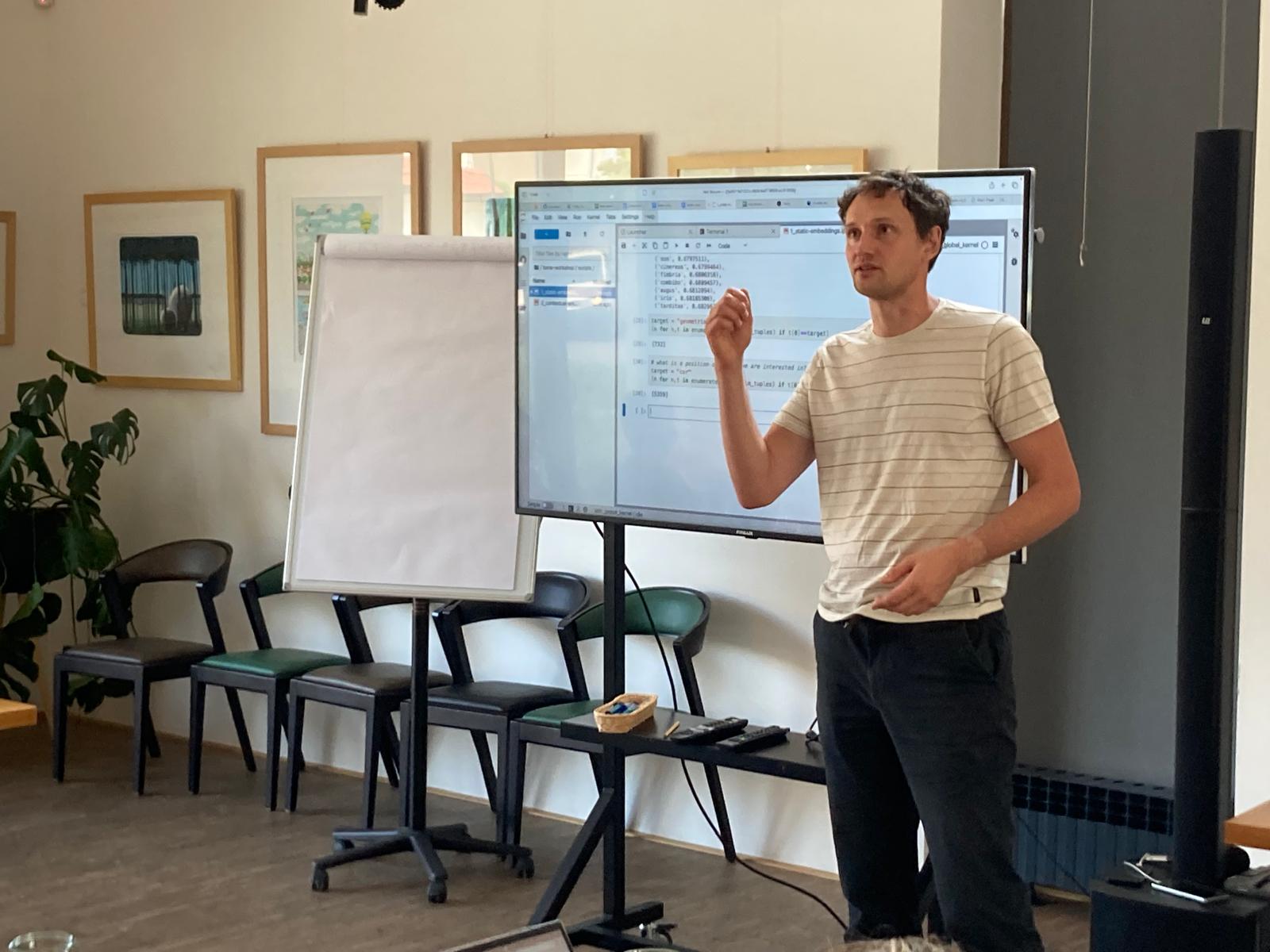
- Vojtěch Kaše – Computing NOSCEMUS: a practical workshop in Python 1 & 2
In the first part of his workshop, Vojtěch introduced participants to the TOME project’s coding environment, which now relies on the cloud computing services provided by CCS-Lab. He guided attendees through scripts used for generating, analysing, and visualising static word embeddings trained on the NOSCEMUS corpus. In the afternoon session, Vojtěch presented the Computational-Historical Group’s current work with contextual Latin embeddings based on Latin BERT, exploring their potential for metaphor detection if correlated with the static embeddings. See videos from the workshop here and here.
- Jana Švadlenková – Cognitive & computational approaches to metaphors: an overview
Jana provided a compelling overview of the history and systematics of Cognitive/Conceptual Metaphor Theory (CMT). She shared examples of practical applications—such as mapping one conceptual domain to another—and highlighted theoretical challenges within CMT, including Fauconnier and Turner’s conceptual blending theory and blended mental spaces. One key message from Jana’s talk was that metaphors are challenging not only for machines but also for humans. This led to a discussion about the need for benchmarking to validate the effectiveness of an AI-enhanced metaphor detector for early modern Neo-Latin texts.
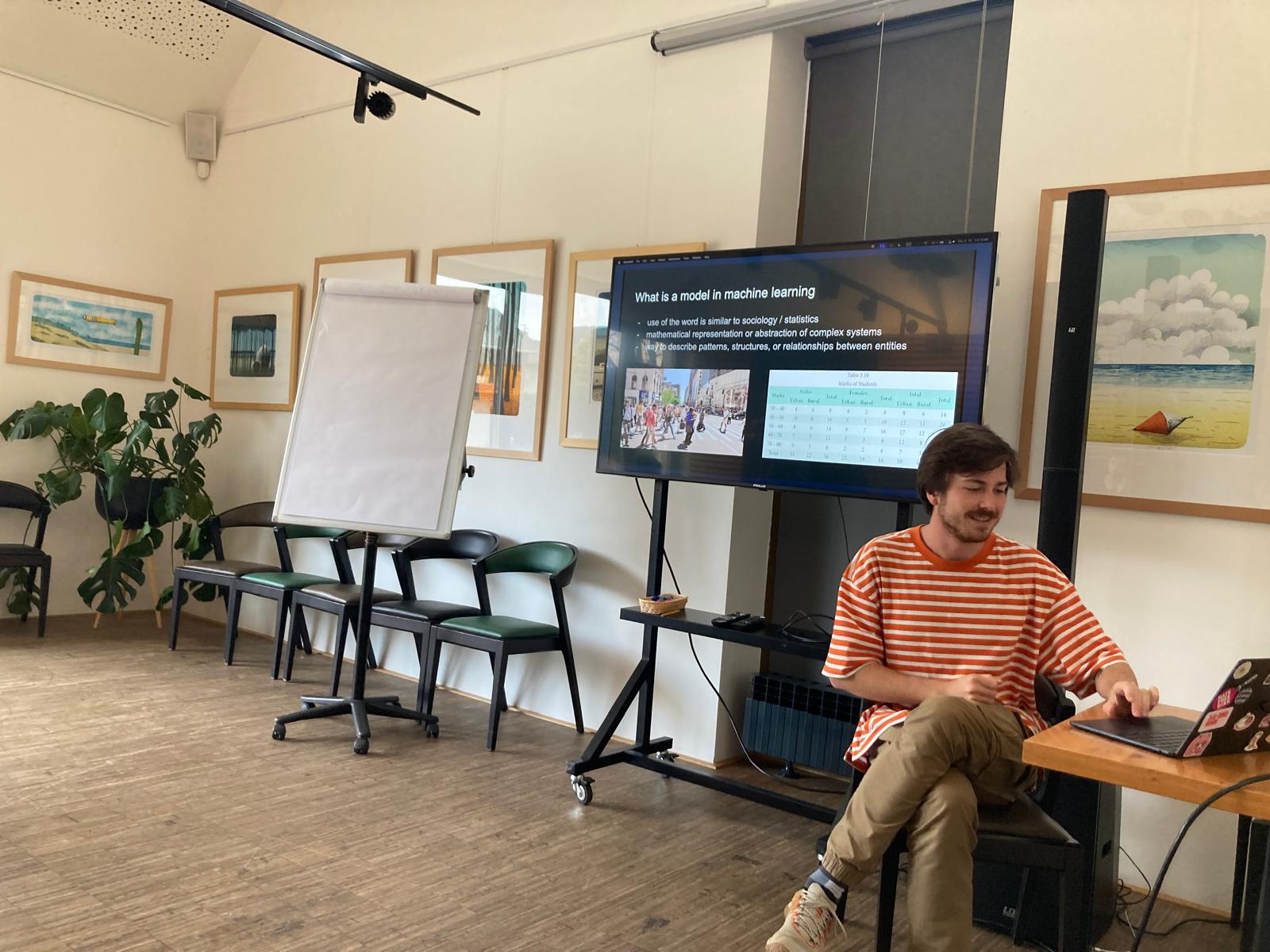
- Jan Tvrz – Contextual word embeddings and metaphor detection
Jan explained how contextual word embeddings work, how they are generated, and how they relate to the challenge of metaphor detection. Unlike static embeddings (e.g., Word2Vec), dynamic contextual word embeddings capture the context in which a word (token) appears, alongside the specific sense/meaning of that word-token. This is akin to the theories of late Wittgenstein’s philosophy of language. Jan emphasised that for effective metaphor detection, a combination of both static and dynamic embeddings seems to be the way to go. He also demonstrated how metaphor detection works in English corpora using the BERT model, and discussed TOME’s current efforts to adapt this approach for the NOSCEMUS corpus of early modern Latin scientific texts using Latin BERT. For more information, see Vojtěch’s videos linked above.
III. DAY 3 – Digital-Philological Group
- Jo Hedesan – Objectives, Approaches and Results of the Transcription Team & Transkribus training
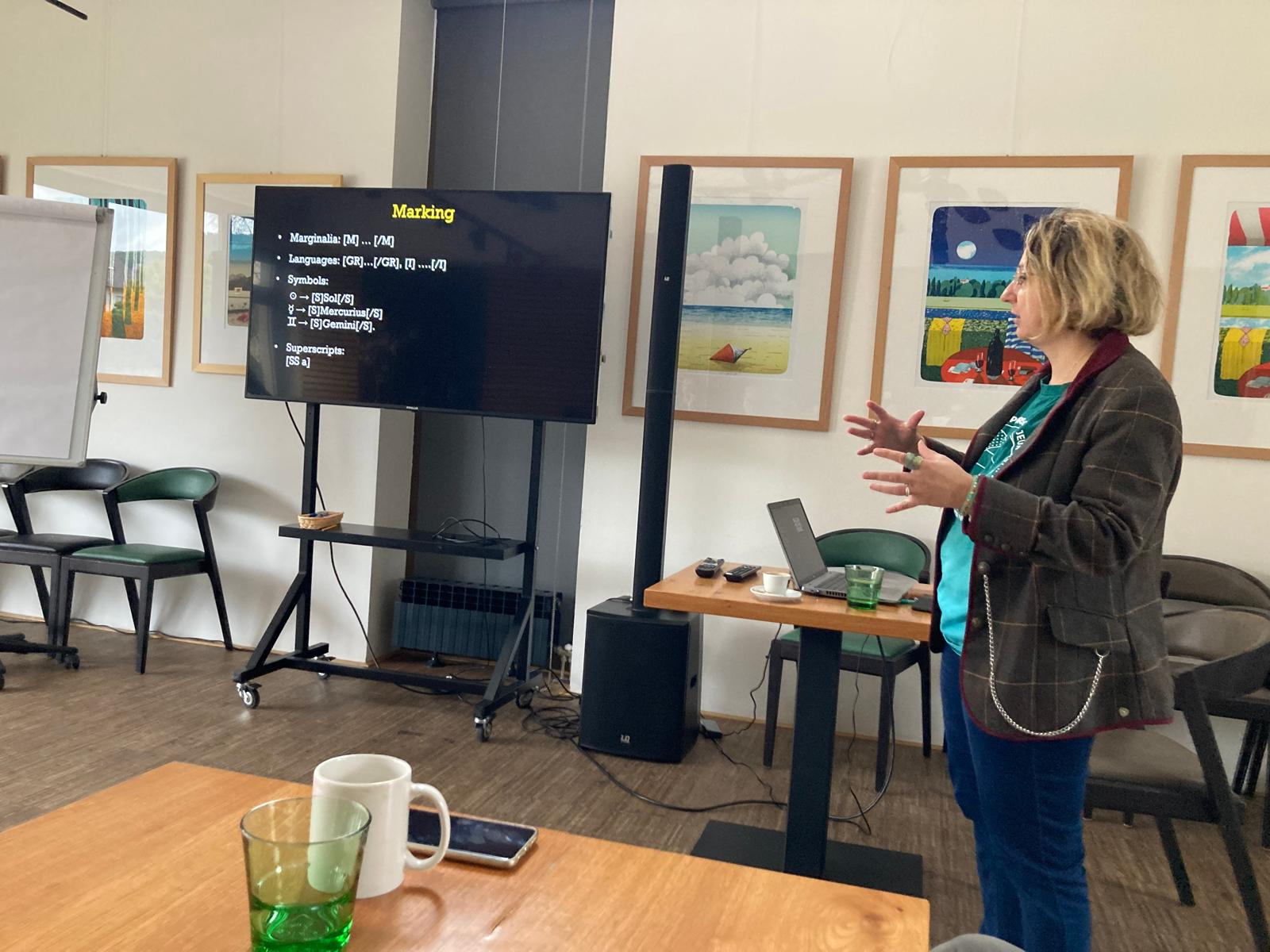
Jo introduced the objectives of her group: transcribing the printed Latin alchemical and Paracelsian books from around 1500 to 1600, and from 1601 to circa 1700, and assembling the transcriptions in the EMLAP corpus, representing the two centuries of alchemy and Paracelsianism. By the end of the TOME’s year 1, the group had transcribed a highly curated and representative sample of 16th-century alchemy, comprising a catalogue of 140 works, with approximately 70 works transcribed to date.
Jo presented two definitions of alchemy: a narrow one (“transmutation of metals”), and a broader definition, which was employed for compiling the catalogue of EMLAP. She also appreciated the outstanding, careful and hard work of the members of her group; moreover, she visually reflected on the group’s workflow and on the transcription pipeline, standards, and procedures the group follows. Last but not least, Jo discussed the Transkribus recognition model TOME 2.1, which she currently works on and trains to optimalise the transcription process.
Conclusion
TOME’s 2nd School in Dobřichovice was a wonderful event that fostered synergy, knowledge-sharing, and innovation across the three diverse research groups. Over the three days, participants explored a range of historical, theoretical, methodological, and digital topics, enriching the collective understanding of early modern metaphors, encyclopaedic endeaevours, computational-historical research perspectives, and machine-human transcription challenges. The interactive format of workshops, discussions, and presentations gave rise to a dynamic environment for individual growth, team cohesion, and closer friendships.
The event not only highlighted the cross-disciplinary (“encyclopaedic”) potential within the TOME project but also reaffirmed the importance of teamwork in addressing complex academic challenges in the 21st century’s third decade. With very fruitful, valuable and productive insights gained, and with the professional relationships and friendships strengthened, the team is now very well equipped to advance its research goals in the months ahead.
Leave a Reply